

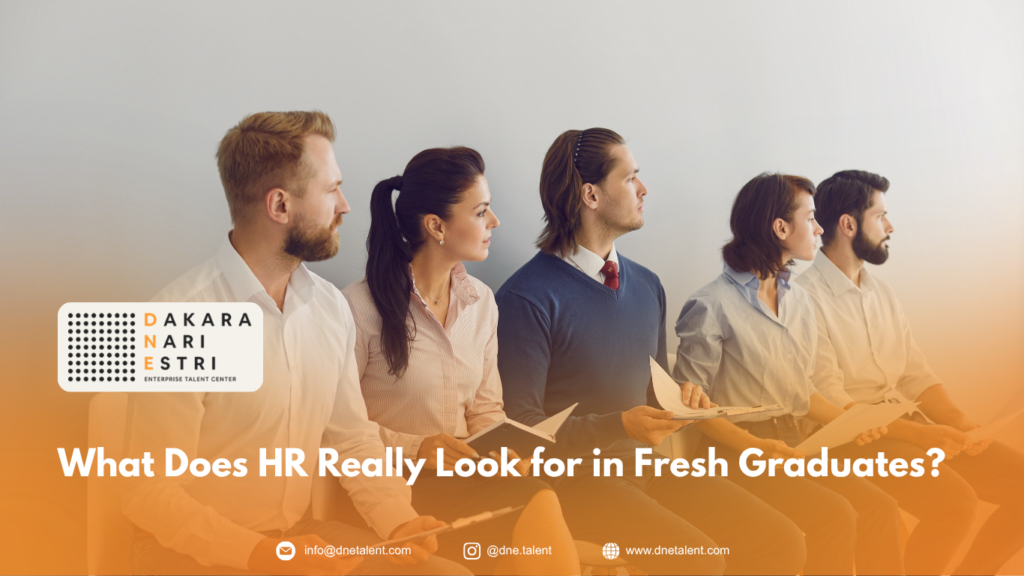
Graduating from university is often seen as the finish line. For many people, it is the starting point of their journey into the professional world. As competition becomes increasingly intense, many fresh graduates find themselves asking the same question: “What does HR actually look for when hiring candidates with little or no work experience?”
In the past, the name of a university, a high GPA, or an academic degree were often key considerations. Today, however, recruitment is gradually shifting towards skills-based hiring—an approach that places greater emphasis on a candidate’s abilities, potential, and readiness to work rather than solely on their educational background.
Education still matters. It provides a foundation and demonstrates a person’s knowledge in a particular field. However, when several candidates have similar academic backgrounds, HR often looks beyond the degree: How does the candidate think, communicate, solve problems, and adapt?
Skills That Are Becoming Increasingly Important
- Communication skills are among the most frequently assessed competencies. It is not simply about speaking confidently during an interview. HR also observes how candidates explain their experiences, listen actively, understand questions, and express their ideas clearly. For example, when discussing an organizational experience, a candidate who can clearly explain the situation, their role, the actions they took, and the results achieved will usually demonstrate stronger communication skills than someone who provides vague or overly general answers.
- Problem-solving skills are also highly valued. HR does not expect fresh graduates to have all the answers. Instead, they want to understand how candidates think when facing a challenge. Through experience-based questions or simple case studies, HR can assess whether a candidate simply waits for instructions or is able to analyze a situation and take initiative in finding a solution.
- In a workplace that continues to change rapidly, adaptability has also become increasingly important. Companies need individuals who can learn quickly, remain open to feedback, and adjust to new situations. HR may explore this through questions about how candidates have dealt with change, failure, or situations that did not go as planned. In some recruitment processes, adaptability may also be observed through assessments or psychometric tests that evaluate work styles and responses to different situations.
- Collaboration is equally important, as most roles involve working with people across teams and functions. Teamwork can be demonstrated through experiences in student organizations, internships, committees, or group projects. HR often wants to understand the candidate’s role within a team. Do they simply complete their own tasks, or can they also coordinate with others, manage differences of opinion, and contribute to achieving a shared goal? Competency-based interviews and group discussions can provide valuable insights into these behaviors.
Experience Does Not Always Mean Full-Time Work
For fresh graduates, experience can come from many places: internships, student organizations, academic projects, volunteering, freelance work, or competitions. What matters is not only what the activity was, but also the candidate’s role, contribution, and learning from the experience.
Ultimately, HR is not looking for fresh graduates who already know everything. They are looking for individuals with potential, a willingness to learn, the ability to adapt, and the readiness to grow.
At DNE Talent, we believe that workplace readiness is built through more than academic knowledge. Through our Assessment, Training, and Career Coaching services, we help individuals and organizations identify and develop competencies that are relevant to today’s evolving workplace.