

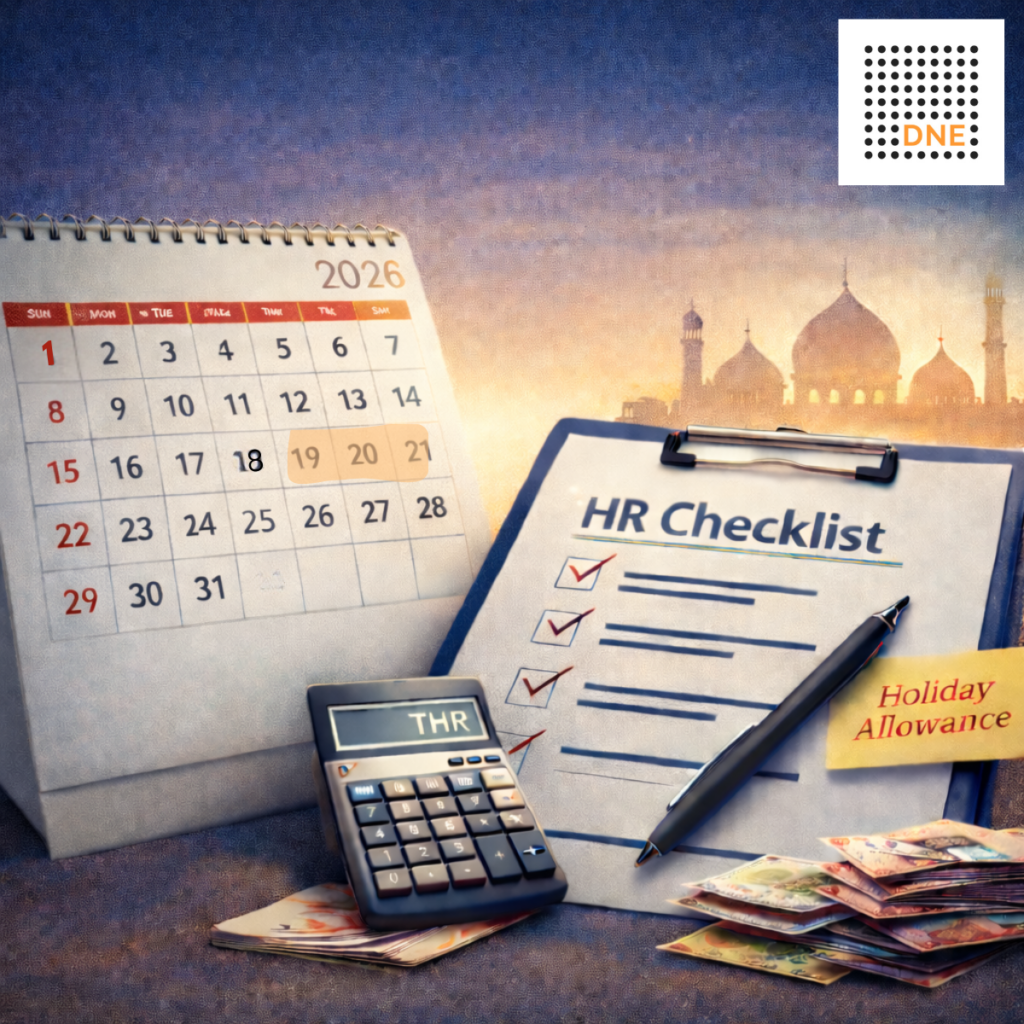
March 2026 will be a challenging month for HR teams and leaders. Within a single month, companies will face Nyepi, Eid holidays, collective leave, and the obligation to pay annual religious allowances. For employees, this is good news. For HR and management, it is a critical period that requires careful preparation.
Why should HR take March 2026 seriously?
Because during this month:
- Many employees will request additional leave (additional leave)
- Client activity will slow down
- Work focus will drop one to two weeks before the holidays
- Bottleneck risks increase when only a few people are available
- Financial pressure rises due to holiday allowance payments
This means HR is not just handling administration; but managing the organizational rhythm so operations do not collapse before the holidays and do not become chaotic afterward.
Key HR Focus Areas for March 2026
Checklist #1. Holiday Allowance: Do Not Wait Until the Deadline
Holiday allowance is not only a legal obligation but also a matter of employee trust. HR should:
- Validate allowance data
- Set a clear payment schedule
- Calculate proportional allowance for employees with less than one year of service
- Cross-check salary and allowance components
- Provide proof of transfer and individual notifications
- Store payment records for audit purposes
Checklist #2. Leave Management: Map Holidays and Additional Leave Risks
The classic issue before Eid: everyone wants to take leave on the same dates. HR can:
- Set clear deadlines for leave applications
- Define minimum staffing levels
- Simulate worst-case scenarios if many employees take leave
- Arrange schedules for critical functions such as Operations, IT, Finance, and Customer Service
- Communicate policies early to avoid last-minute conflicts
- The goal is not to limit leave, but to ensure that key roles are not all absent at the same time.
Checklist #3. Back-to-Work Preparation
The first working day after a long holiday often feels chaotic because everyone starts from zero. This can be prevented by:
- Setting up formal handover mechanisms
- Defining work priorities before the break
- Preparing post-holiday work plans
- Assigning clear emergency contacts or PICs
- Requiring employees on leave to list active tasks
- Ensuring documents and access are not held by only one person
Periods like this reveal the maturity of an organization. How a company manages March 2026 will show:
- Whether HR systems are structured
- Whether leadership is clear
- Whether work culture is mature
- Whether employees feel treated fairly
- Long holidays are not just a break—they are a stress test for work systems.
As an HR partner, DNE Talent supports companies in building adaptive HR policies for critical periods such as Nyepi and Eid. From leave management frameworks and allowance calculations to workflow design before and after long holidays, DNE Talent believes smooth transitions are not accidental—they are the result of consciously designed systems.